SKILL.md核心配置深度剖析
SKILL.md 负责让 Agent 用很低成本识别能力边界。超级 AI 智能体里的动态 Agent 和能力路由场景,适合对照理解技能描述、触发条件和执行资源为什么重要。
项目详细介绍:什么是超级 AI 智能体?
上一篇我们看了整个Skill的目录结构,知道了SKILL.md是唯一的必选文件。但"必选"这两个字背后的分量远不止于此——一个Skill好不好用,90%取决于SKILL.md写得怎么样。
你可以把references、scripts想象成一个战士的装备和武器,而SKILL.md就是这个战士的大脑和经验。武器再好,如果脑子不清楚什么时候用什么武器、该用什么战术,战斗力一样上不去。
所以这一篇,我们把SKILL.md掰开揉碎,从结构到写法到踩坑经验,全面覆盖地来梳理一下。
SKILL.md的两层结构
一个SKILL.md文件,从上到下分成两个截然不同的区域:
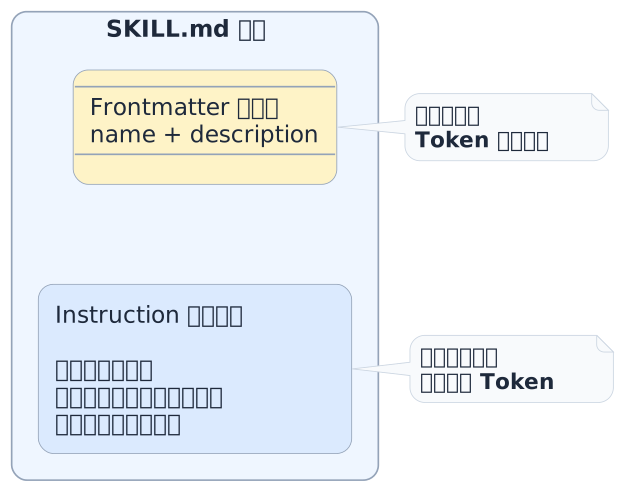
这两层之间的分界线就是三个短横线---。上面是门面,下面是内功。我们分别来讲。
Frontmatter:技能的"一句话简历"
基本格式
Frontmatter必须放在文件的最开头,用两组---包裹:
---
name: log-analyzer
description: Analyze application logs to identify errors, performance bottlenecks, and anomalous patterns. Use when the user needs to troubleshoot issues or monitor system health.
---
就这么两个字段,name和description。看起来简单到不行,但这恰恰是整个Skill体系中最关键的设计点。
为什么只要这么少的信息
我们来换个角度想这个问题。
假设你是一个HR,面前有100份简历,你需要从中筛选出适合"后端开发"岗位的候选人。你会怎么做?
大概率不会每份简历都从头到尾读一遍,而是先快速扫一眼"姓名"和"一句话自我介绍",不匹配的直接跳过,匹配的再细看。
智能体选择技能的过程跟这一模一样:
- 扫描所有Skill目录,读取每个SKILL.md的Frontmatter
- 把所有的name和description列成一个"候选清单"
- 拿用户的任务去和这个清单做匹配
- 只有匹配上的技能,才值得花Token去读完整内容
如果一开始就把每个技能的完整指令都加载进来,那还没开始干活,上下文就已经满了。
假设你有10个Skill,每个的Instruction平均800 Token。
- 不分层:10 × 800 = 8000 Token,还没干活就先消耗了8000
- 分层加载:10个Frontmatter大约 10 × 40 = 400 Token,只激活需要的那1-2个Skill再加800-1600 Token
Token消耗从8000降到1200-2000,省了75%以上。
name字段怎么写
name是技能的唯一标识符,有几条实战建议:
- 用英文短横线连接的小写单词:
code-review、log-analyzer、api-tester - 要能望文生义:看到name就大概知道这技能干什么
- 不要太长:一般2-3个单词就够了
- 全局唯一:同一个智能体下不要有两个同名的Skill
好的name示例:
| name | 技能用途 |
|---|---|
code-review | 代码审查 |
sql-optimizer | SQL查询优化 |
api-doc-gen | API文档生成 |
log-analyzer | 日志分析排障 |
test-generator | 单元测试生成 |
不推荐的name:
| name | 问题 |
|---|---|
skill1 | 完全看不出干什么 |
handleUserRequestAndGenerateReport | 太长,像Java方法名 |
my_awesome_skill | 下划线不符合惯例,描述性差 |
description字段怎么写
description是比name更重要的字段。因为智能体做技能匹配时,主要靠的就是description。
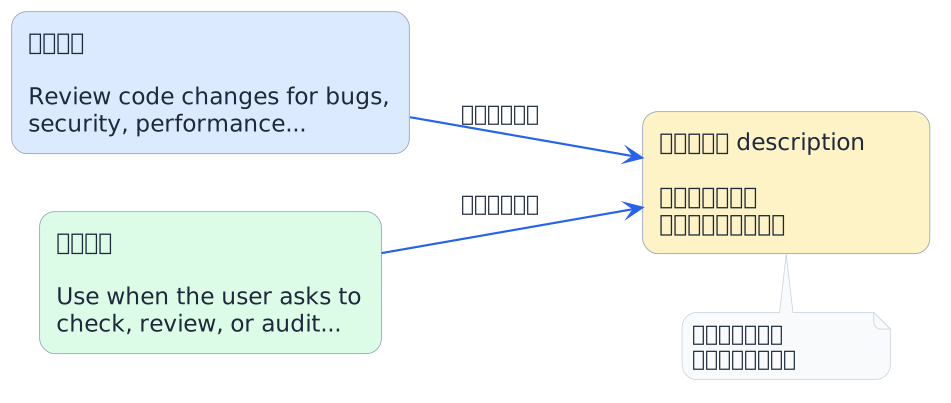
一个好的description通常要回答两个问题:
- 这个技能能做什么(能力边界)
- 什么情况下应该用它(触发条件)
我们来看几个对比:
反面案例——太笼统:
description: A useful skill for developers.
这等于什么都没说。智能体根本不知道该在什么任务上激活它。
反面案例——太狭窄:
description: Check if Java HashMap usage follows thread-safety best practices.
如果用户只是想做一般性的代码审查,这个描述可能就不会被匹配上。
正面案例——恰到好处:
description: Review code changes for bugs, security vulnerabilities, performance issues, and style violations. Use when the user asks to check, review, or audit code quality in any programming language.
这个描述做到了:
- 明确列出了能力范围(bugs、security、performance、style)
- 指出了触发关键词(check、review、audit)
- 不限定具体语言,保持了合理的覆盖面
把这个思路再抽象成一个公式,会更容易记:
很多人在description里写中文。虽然现在的大模型中英文理解都不错,但description建议统一用英文。原因很简单:
- Anthropic官方规范和示例全是英文
- 英文在Token效率上通常更优
- 团队协作和开源共享时通用性更好
Instruction:技能的"操作手册"
Frontmatter之后的全部内容就是Instruction——智能体真正执行任务时的指导文档。
Instruction的核心职责
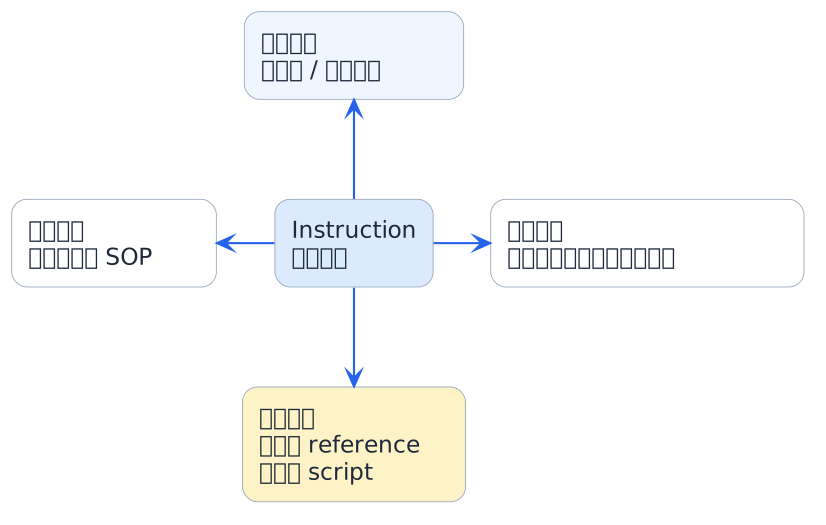
Instruction需要承担四类任务:
职责一:划清使用边界
告诉智能体这个技能该用在什么场景,不该用在什么场景。这是防止技能被误用的第一道防线。
## When to use
- User explicitly asks for code review or quality check
- User submits a pull request and wants feedback
- User asks "is this code okay" or similar questions

## When NOT to use
- User only wants code explanation without quality assessment
- User is asking for code generation, not review
职责二:定义执行步骤
把任务拆解成清晰的、可复现的步骤。不要给模型留太多自由发挥的空间。
## Review process
1. Identify the target files from user's message
2. Read each file using the read_file tool
3. For each file, check against:
   a. Critical: null pointer risks, resource leaks, SQL injection
   b. Warning: unused variables, overly complex methods
   c. Style: naming conventions, comment quality
4. Run scripts/complexity_check.py on files over 100 lines
5. Compile all findings into a structured report
职责三:约束输出行为
明确规定输出格式、禁止的行为、异常处理方式等。
## Output rules
- Always group issues by severity level
- Each issue must include: file path, line number, issue description, fix suggestion
- If no issues found, explicitly state "No issues detected" instead of making up problems
- Never modify the user's code directly unless explicitly asked
职责四:调度关联组件
指明什么时候去读reference、什么时候调用script。
## Reference usage
- For Java reviews: consult references/java-style-guide.md
- For Python reviews: consult references/python-conventions.md

## Script usage
- Use scripts/complexity_check.py to calculate cyclomatic complexity
- Use scripts/dependency_scan.py to check for known vulnerable dependencies
如果你要快速检查一份Instruction是否完整,可以对照下面这张结构图:
写好Instruction的五条心法
根据实际使用经验,总结了几条非常实用的原则:
心法一:像写新员工培训手册一样写
不要假设智能体"应该知道"某个常识。它每次执行都是从零开始理解你的指令。步骤越具体、越明确,执行的一致性就越高。
心法二:步骤要可验证
每个步骤最好都有一个可以检查的产出。比如"分析代码质量"就太模糊了,"用XX工具扫描并生成报告"就好得多。
心法三:提前处理边界情况
用户没指定文件怎么办?扫描发现零问题怎么办?脚本执行报错怎么办?这些边界场景在Instruction里预设好处理方式,能大幅减少执行时的意外行为。
心法四:重的内容放reference
如果你的Instruction里有大段的规则列表、字段定义、示例模板,考虑把它们移到reference里,Instruction只保留"去查references/xxx.md"这样的引用指令。
心法五:一个Skill只做一件事
不要试图在一个Skill里塞下所有功能。一个技能做好代码审查,另一个技能做好测试生成,比一个"万能Skill"要靠谱得多。
一个完整的SKILL.md样例
把前面讲的内容综合起来,看一个完整的例子。这是一个日志分析的Skill:
---
name: log-analyzer
description: Analyze application logs to identify errors, performance bottlenecks, and anomalous patterns. Use when the user needs to troubleshoot production issues or understand system behavior from log data.
---

# Log Analyzer

## When to use this skill
- User provides log files or log snippets and asks for analysis
- User reports a production issue and wants root cause investigation
- User asks to find patterns or anomalies in system logs

## When NOT to use
- User wants to set up logging configuration (not analysis)
- User is asking about log rotation or storage management

## Analysis workflow
1. Receive log content from the user (file path or pasted text)
2. If file path provided, read using the read_file tool
3. Identify log format (JSON, plain text, CSV, etc.)
4. Run scripts/log_parser.py to extract structured entries
5. Categorize entries by level: ERROR > WARN > INFO
6. For ERROR entries:
   a. Group by error type and count occurrences
   b. Identify the earliest occurrence timestamp
   c. Check if there's a pattern (periodic, burst, etc.)
7. For performance analysis:
   a. Run scripts/latency_stats.py to compute P50/P95/P99
   b. Flag any requests exceeding the threshold
8. Consult references/common-error-patterns.md for known issue matching
9. Generate analysis report

## Output format
- Start with a one-paragraph executive summary
- Follow with detailed findings grouped by category
- Each finding includes: timestamp range, frequency, impact assessment
- End with recommended next steps

## Error handling
- If log format is unrecognized, ask the user to clarify
- If log file exceeds 10000 lines, use scripts/log_sampler.py to sample
- If no significant issues found, report "No anomalies detected" with confidence level
Frontmatter和Instruction的关系总结
最后用一张对比图来收尾:
| 维度 | Frontmatter | Instruction |
|---|---|---|
| 位置 | 文件顶部,---包裹 | ---之后的全部内容 |
| 加载时机 | 始终被扫描(常驻) | 匹配后才加载(按需) |
| 面向对象 | 技能发现和路由决策 | 具体任务的执行指导 |
| Token消耗 | 极低(通常不到50 Token) | 中等(通常200-1000 Token) |
| 类比 | 一句话简历 | 上岗后的操作手册 |
| 写不好的后果 | 技能永远不会被激活 | 技能虽然被激活但执行质量差 |
两者缺一不可:Frontmatter负责"被找到",Instruction负责"干得好"。
下一篇我们会从整体视角来看,SKILL.md、references、scripts是如何在运行时通过四层渐进式加载机制协作工作的——这是Agent Skills在Token效率上的核心秘密。